34-Year-Old Lagos Wife Reveals the 3 Peaceful Woman Triggers That Make Any Nigerian Husband Stop the Late Nights, Come Home Directly, and End Outside Friendships… Before Month 2

Alfred was a good man on paper.
Hardworking. Responsible. His family had welcomed me warmly before the wedding. My family loved him. We had twin children — one boy, one girl. A good home in Lagos. No money problems. At every owambe, every naming ceremony, every family gathering, people looked at us and said: “This couple ehn. God bless them.”
I thought that was a sign of something solid.
It was a performance. Mine.
I woke up at 5am to cook before going to work. I kept the house exactly how he liked it. I planned his birthday celebrations. I covered for him in front of his family when things were not perfect. I prayed for him every morning before I prayed for myself. When he was stressed, I was the one who stayed calm. When he was distant, I was the one who closed the gap.
I gave. And gave. And gave.
And then Alfred started coming home late.
First it was work. A project running over. A client dinner. Reasonable things, reasonable explanations. I believed him. I was a good wife. Good wives believe their husbands.
Then it was past midnight. Then it was 1am without a message. Then it was 2am with the phone ringing out.
There was always a reason. First a deadline. Then traffic. Then “I told you about this.” Then “you’re stressing me.” There was always a next thing. Never an honest answer.
I started asking questions. Quietly at first. Then less quietly. The moment he walked through the door, the questions were already on my tongue.
“Where have you been?” “Why didn’t you call?” “Is this how a married man behaves?”
What started as questions always became arguments. Raised voices. Silent treatments. Him sleeping with his back to me. Me lying awake staring at the ceiling at 3am, running the same thoughts on a loop.
Every fight, he came home later the next time.
I was putting the twins to bed alone every night. Posting smiling family pictures on Sunday that got two hundred likes — knowing the woman in those pictures had cried alone the night before. Telling my mother “everything is fine” in a voice I no longer believed myself.
At every family gathering — smiling, laughing, being the good wife — while knowing deep down that I had not had a real conversation with my husband in months. That the man sitting beside me in that photo was also somewhere I could not reach.
Six years. Two children. A home that looked like everything from the outside.
One evening after a particularly bad argument, Alfred walked out. I sat alone at the dining table. The twins were asleep. The house was quiet. I looked at my reflection in the dark window across the room.
I did not recognise the woman looking back.
That woman had been fighting for a marriage with everything she had. And every fight was making things worse. She had been solving the wrong problem. For years.
I sat there and asked myself one question.
Is there a calmer way to reach my husband’s heart?

I am not a relationship expert. I am not a counselor. I am a Lagos wife who spent six years giving everything to her marriage — and fighting the wrong battle the entire time. The day I stopped fighting and learned a different approach, everything changed. I am sharing this because I know I am not the only one.
The Night a Marriage Coach Told Me What Nobody Else Would
My friend Chidinma had been seeing a marriage coach. She had been hesitant to tell me — she knew I would say I had already tried everything.
I had tried everything. Prayer. More submission. More patience. Less confrontation. More confrontation. Giving him space. Closing the space. Talking to my pastor. Nothing worked. Every approach produced the same result: Alfred came home later, said less, and the distance between us grew wider.
Chidinma gave me Coach Adaeze’s number anyway. I held it in my phone for two weeks before I called.
I called on a Thursday evening. The twins were asleep. Alfred was not home yet. The house was quiet in the particular way it gets when you are tired of being alone inside your own marriage.
Coach Adaeze picked up on the second ring.
For the next hour, she told me something I had never heard anywhere — not from any pastor, not from any book, not from any girlfriend or aunty who had ever given me advice about my marriage. She told me there were three things. Three specific things that separated the women whose marriages turned around from the women who kept fighting and losing ground.
“The first thing is Emotional Safety. Not comfort — a man can be comfortable and still be unfaithful. Emotional Safety is something deeper. It is the feeling a man gets when he walks through his own front door and his body actually relaxes. When being home does not feel like walking into a courtroom with a prosecutor waiting.”
“When Emotional Safety disappears from a marriage, a man does not immediately leave. He withdraws first. He finds reasons to be anywhere but home. He does not even always know why. His body just knows that going home feels like work. That is when the late nights start.”
“And the fighting,” she said, “destroys Emotional Safety faster than anything else. Every argument is a withdrawal from an account you cannot afford to empty.”
I sat very still while she said this. I had been making that withdrawal every single night for years. I had not known that was what I was doing.
“The second thing is Calm Influence. Not silence — that is different. Silence is withdrawal. Calm Influence is the ability to say a hard truth in a voice that does not make him defensive. To raise a real concern in a way that opens his heart instead of shutting it.”
“Most Nigerian women have been taught — by watching their mothers, by our culture, by instinct — that volume is strength. That if you don’t shout, you won’t be heard. But every woman I have worked with who turned her marriage around tells me the same thing: the moment I stopped shouting, he finally started listening.”
“The third thing is Peaceful Presence. This is the one most women miss entirely. It is not about being soft or submissive. It is the specific energy a woman carries when she has found her own peace — not from her husband’s behaviour, not from his approval, but from her own sense of who she is and what she is worth.”
“When a woman has this, a man does not want to lose her. Not because she threatens him. Because she is the most settled, most real thing in his world. Men protect what grounds them. Every time.”
“The women who are fighting — interrogating, monitoring, threatening — are not keeping their husbands loyal. They are destroying the very thing that loyalty grows from. Every fight drains the Emotional Safety. And without Emotional Safety, a man stops choosing home.”
“The women who turned their marriages around were not more beautiful, more educated, or more spiritual than the women who were still fighting.”
“They had simply stopped doing the things that were destroying the foundation — and started building the three things that actually keep a man. Both of those shifts can be learned. That is what I am going to teach you.”
I sat at that dining table until almost midnight. Long after she had finished speaking.
I had spent six years trying to win arguments I should never have started. I had been solving the wrong problem completely. Alfred was not late because he did not love me. Alfred was late because coming home felt like a battle he was always going to lose. And I had been the one making it feel that way — without knowing it. Without meaning to.
The First Few Days: Nothing Obvious
I started that same night. Not with a conversation. Not with a confrontation. Just with the first shift Coach Adaeze had described.
1
An honest look at how our home had been feeling from Alfred’s side. The result was uncomfortable. I had turned our home into a place he dreaded returning to. Not out of malice. Out of fear and pain. But the effect was the same. I cried. Then I decided to change what I could control.
3
My chest was hot. My whole body wanted to ask the questions. I breathed slowly and said: “Alfred, welcome. Food is warm. We can talk when you’re ready.” Then I went into the bedroom. He stood in the hallway for a long moment. I heard him. He did not know what to do with calm. Neither did I.
4
He came home at 11:30pm. My instinct rose like heat. I remembered what Coach Adaeze said: one withdrawal at a time, you drain the account. One deposit at a time, you rebuild it. I did not ask a single question. I fell asleep before him for the first time in months.
2
Not about the late nights. About a problem at work. About something his business partner had said that was worrying him. Small things — but he brought them to me. He had stopped doing that long ago. I listened without turning it into a conversation about us. He talked for forty minutes. When he finished, he looked lighter. I cried quietly in the bathroom after he fell asleep. Not from sadness. From the specific relief of being chosen again.
3
He came home at a reasonable hour. We ate together. He was quiet for a while. Then he said there was a woman at the office who had been getting close to him. He said he had been keeping distance. He said he was telling me because he wanted me to know. He had never volunteered something like that before in six years. Not once. It happened the moment I stopped forcing it.
3
Alfred came home directly after work. He booked a weekend at a hotel for our anniversary — no children, just us — without me mentioning it once. My sister called to ask if we had been to counseling. “You two seem different,” she said. We had seen no one. I had simply stopped doing the things that were destroying our foundation, and started building the three things that hold a marriage together.
I Did Not Plan to Tell Anyone
I told one person. My friend Kemi. On a phone call three months later, when her own marriage was in the same place mine had been.
She had been fighting Dayo for years. Late nights. Hidden phone. The same loop. I told her everything — what Coach Adaeze had said, the three things, exactly what I had done differently from Week 1 to Month 3.
Kemi tried it. Same approach. Different marriage. Same result.
She sent my contact to four women before she even called me back. And those four women sent it to others. Woman to woman, across Lagos, Abuja, Port Harcourt, Enugu.
The results were not dramatic. They were consistent. Same three things. Same shift. Different marriages. Same outcome.
Coach Adaeze saw what was happening and decided to document the method properly — not just for the women in her sessions, but for any Nigerian wife who needed it. At midnight. From her phone. Without having to explain her situation to anyone first.
Here is what happened with Kemi. And with the other women who tried it after her.
Kemi used to fight with Dayo almost every week. If he came home late, fight. If he hid his phone, fight. One evening, Dayo walked in late — his face already stiff, expecting the usual outburst. Kemi’s chest was hot. But instead of shouting, she said calmly: “Dayo, welcome. I trust your day went well. The food is warm. We can talk when you’re ready.” Dayo paused. He was ready for noise, ready for blame — and got none. That same night, he sat beside her and said: “Kemi… I know I’ve not been myself lately.” He opened up about work, about stress, about a woman at the office getting too close. Kemi didn’t attack. She listened. From that day, Dayo started coming home more often.
↑ Dayo started coming home directly — Week 2Chinedu was a closed man. He never talked about his feelings. Amaka kept complaining: “You don’t talk to me. You don’t open up.” Every time she said it, he withdrew further. One day, she noticed he looked tired and worried. Instead of saying “what is wrong with you again?” she simply touched his shoulder softly and said: “Babe, don’t worry. Whenever you’re ready to talk, I’m here.” Later that night, Chinedu sat beside her and said: “Amaka… can I tell you something?” He had never used those words before. He told her about work pressure, about feeling like a failure. He cried — not because he was weak, but because he finally felt safe.
↑ Chinedu opened up for the first time — Week 3Mariam and Idris had argued about his late nights for years. One night, Idris came home at 11:45pm. Mariam had prepared for war — her whole body was vibrating. But she stopped herself and said calmly: “Idris… can we talk tomorrow when you’re rested? It’s important to me.” Then she walked into the bedroom. Idris was confused. The next morning he came to her first. She said: “I’m not attacking you. I only want to understand you. These late nights make me feel alone — and I want us to be closer.” He sat down. He explained his stress. He apologised without being pushed. And he adjusted.
↑ First real conversation in 2 years — Week 2Tola and Kola had been together eight years but the spark had died. No romance. No long conversations. Tola used to blame him — “you don’t look at me, you don’t hold me.” But nothing changed. One Saturday morning, Tola made a decision — not to change for Kola, but to become herself again. She dressed in her nice home clothes, played soft music while cooking, hummed like she used to when they first met. That evening, Kola stood by the kitchen door and watched her. He walked up behind her, touched her waist gently, and said: “Tola… you look different today. I’ve missed this version of you.” He had not said anything like that in years. Attraction does not disappear. It gets buried under stress. The Peaceful Woman Method uncovers it.
↑ Kola noticed the shift in one afternoonWhat Happens in the First 7–21 Days
Real messages from women who applied the Peaceful Woman Method.
Why Coach Adaeze Decided to Document This as a Guide
After watching the same pattern repeat across dozens of marriages — women who tried it, got the same results, and immediately sent it to another woman — Coach Adaeze knew she had to stop sharing it one session at a time.
She documented everything. The specific cause of Emotional Starvation in a marriage. The exact words that open a man’s heart instead of closing it. The daily habits that rebuild attraction without performance. The boundaries that earn real respect. What to do when he still does not change after everything. All of it — in plain language, with real examples from real Nigerian marriages, so that any woman could access it at midnight from her phone without needing to book a session or explain her whole situation to a stranger.
I am sharing her guide here because it is the reason my marriage is still standing. And I know I am not the only woman who needs it.
“This is not a guide about tolerating bad behaviour. It is not about shrinking yourself or accepting disrespect. Chapter 8 exists for women whose husbands still do not change after everything — because sometimes the most powerful thing a woman can do is choose herself.”
“The goal of this guide is to make you so settled in yourself that you stop fighting for love and start building it. Or, if building is no longer possible, leave with your dignity completely intact. Both outcomes are covered.”
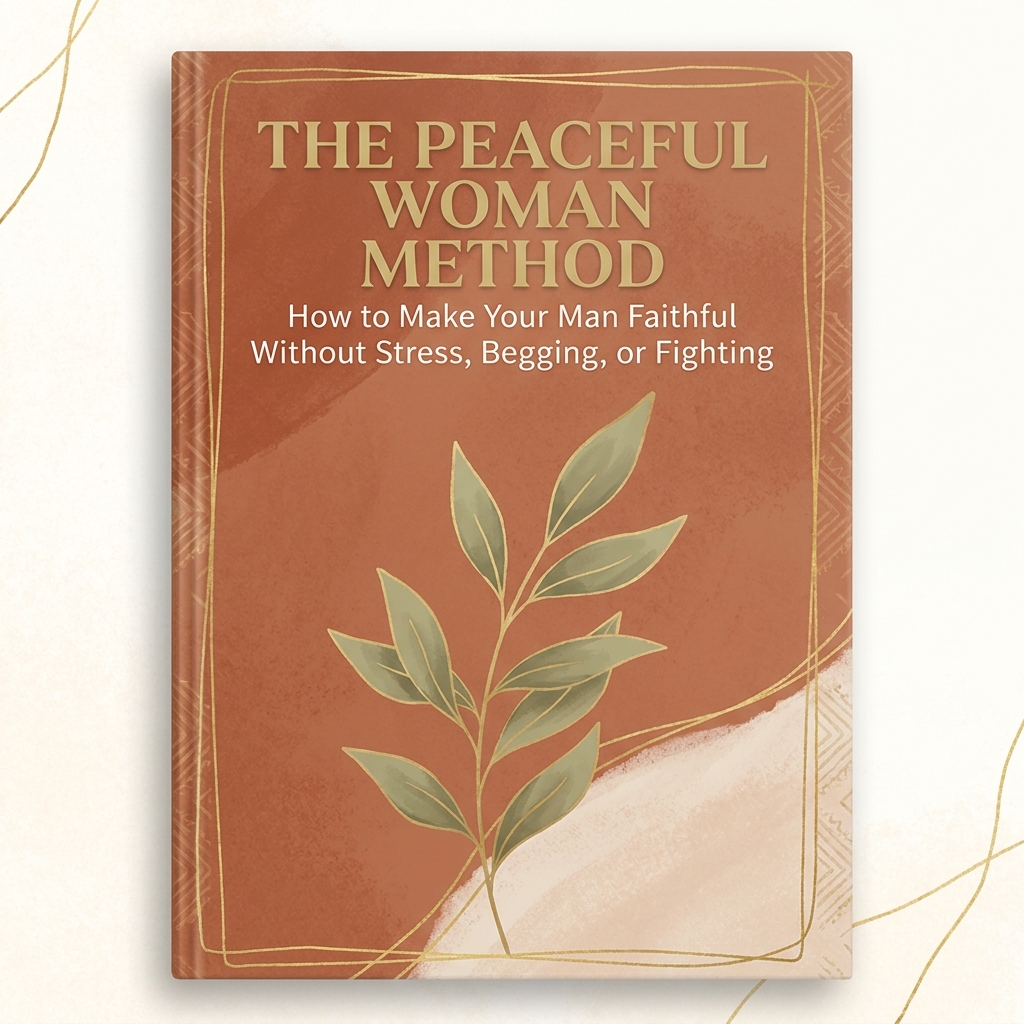
Everything the Peaceful Woman Method teaches — documented in eight clear chapters so you can start applying it tonight, whether you have been married six months or sixteen years.
- Why Men Cheat — And Why They Don’t — The psychology behind male loyalty. The four real reasons a man emotionally withdraws — and why fighting makes every single one of them worse. Chapter 1
- Becoming the Peaceful Woman — The soft-life energy men find almost impossible to walk away from. Five specific daily habits that build it — even when you are exhausted from years of conflict. Chapter 2
- Emotional Safety: The Foundation of Faithfulness — The Secure-Base Technique. How to remove the silent causes of distance most women never recognise. How to become the first person he wants to talk to. Chapter 3
- Communication That Makes Him Listen, Change, and Commit — The Zero-Fight Communication Method. Sample scripts for the conversations you have been dreading.Chapter 4Sample script — from inside the guideInstead of: “You never listen. You don’t care about this marriage.”The guide teaches: “I’m not attacking you. I only want to understand you. These late nights make me feel alone — and I want us to be closer.”One opens a fight. The other opens a conversation. Mariam used this sentence word for word. Idris apologised without being pushed.
- Rebuilding Attraction the Peaceful Way — How Tola brought her husband back in a single Saturday morning — no makeup, no drama, no performance. The Mystery-Softness-Respect formula. Chapter 5
- Boundaries That Make Him Respect You — How to set clear standards without sounding controlling. The Power of Quiet Consequences. Why “if he loved me he would know” is the sentence keeping most Nigerian women stuck. Chapter 6
- Making Yourself Irreplaceable — The loyalty-trigger habits. How to make him proud to choose you every single day — without losing yourself in the process. Chapter 7
- Protecting Your Peace When He Still Doesn’t Change — How to recognise emotional manipulation. When to pull back vs. when to walk away. The Peaceful Woman Exit Strategy. Chapter 8
Compare This to What You Have Already Spent
- ✖Marriage counseling sessions₦15,000–₦40,000 per sessionValuable when both partners attend. Most Nigerian husbands will not attend. This guide gives you everything you can control — your own approach — starting tonight.
- ✖Relationship seminars and church programs₦5,000–₦25,000 eachInspirational at the event. But no seminar has ever told you exactly what to say when your husband walks in at midnight and your chest is already tight.
- ✖Years of cooking, praying, submitting, and waitingImmeasurableAll of this, given without the method underneath it, keeps producing the same result — a good woman whose goodness is being taken for granted.
- ✖Relationship books written for Western women₦3,000–₦15,000Not written for Nigerian in-laws, Nigerian cultural dynamics, or the specific emotional environment of a Nigerian marriage. The situations are simply different.
Every year inside a marriage that is slowly going cold is a year your confidence quietly erodes, your sense of yourself quietly shrinks, and your children grow up watching what love looks like under constant tension. That cost cannot be refunded. But it can be stopped. Starting tonight.
What It Cost to Build This Guide Properly
| A professional writer to structure years of coaching experience into something clear and practical | ₦45,000 |
| A relationship psychology consultant to verify every method against real behavioural science | ₦40,000 |
| Testing across real Nigerian marriages — Yoruba, Igbo, Hausa, diaspora — so nothing here is theory | ₦30,000 |
| A designer to make it clean and readable on any phone at any hour | ₦15,000 |
| Technology to deliver it to your WhatsApp the moment you pay | ₦10,000 |
| Total invested to bring this to you | ₦140,000+ |
A fair price for this guide is ₦15,000. But this is not about the money. This is about making sure what worked for Nneoma, Kemi, Amaka, Mariam, and Tola reaches every Nigerian woman who needs it — before another year passes.
Once You Click That Button, Here Is What Happens
- You are taken to the secure payment pageCard, bank transfer, or USSD — whichever works. The process takes less than 90 seconds.
- Payment confirms instantlyNo processing time. No business days. The moment it clears, delivery is triggered automatically.
- The guide arrives on your WhatsApp AND email within 60–90 secondsYou can start reading tonight. On your phone. No app required. No waiting until morning.

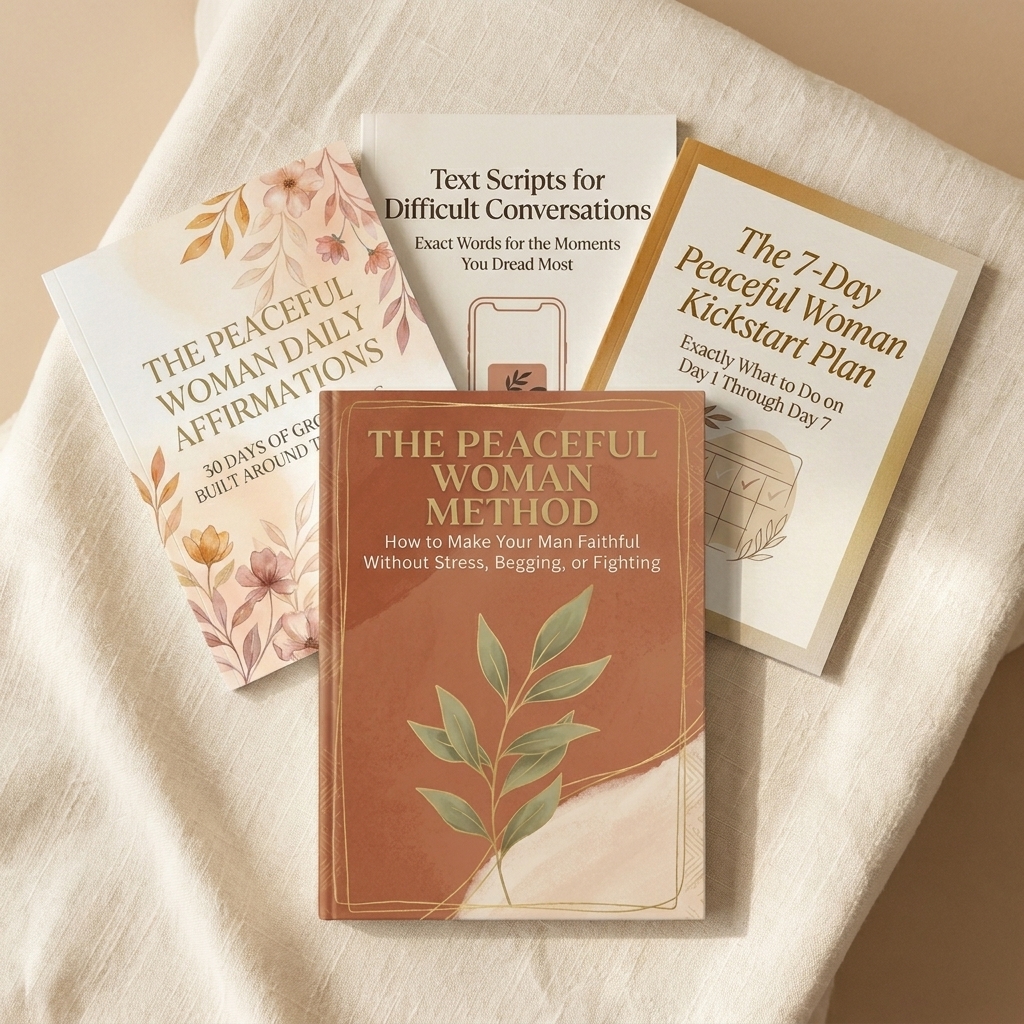
- ✓ The Peaceful Woman Method — Complete 8-Chapter Guide₦15,000
- ✓ Bonus #1: The Peaceful Woman Daily Affirmations₦5,000
- ✓ Bonus #2: Text Scripts for Difficult Conversations₦5,000
- ✓ Bonus #3: The 7-Day Peaceful Woman Kickstart Plan₦4,000
Right Now, You Have Two Choices
- Keep fighting the same fight, getting the same result
- Watch the emotional distance grow wider every month
- Have the same argument six months from now
- Wonder every evening where things went wrong
- Price returns to ₦15,000 when you come back
- Understand why nothing has worked — and fix the root
- Communicate in a way that opens his heart, not shuts it
- Become the woman he cannot stop choosing — every day
- Protect your peace no matter what he does next
- 30-day guarantee · ₦5,000 · Start tonight
Refund
Apply the method for 30 days. If you do not see a measurable shift — in how he communicates, how present he is at home, or how the emotional temperature between you has changed — send a message and receive a full refund. No questions. No drama.
Picture your marriage one month from today.
If you have read this far and you are still hesitating — sit with one honest question.
Not “is this guide worth ₦5,000?” You already know it is. You have been spending far more than that — in sleep, in energy, in quiet suffering — every month inside a marriage that is slowly going cold.
The real question is: do you believe your marriage deserves to feel like one?
Stop fighting. Start building. The woman who carries peace is the woman a man cannot bear to lose.
The Peaceful Woman Method was developed by Coach Adaeze Ezechi, Lagos marriage coach.
Frequently Asked Questions
The moment your payment confirms, the guide is sent to your WhatsApp AND your email within 60 to 90 seconds. No waiting. No business days. It opens as a PDF on any phone without any special app. You can start reading tonight.
This is the most honest question anyone can ask. The guide does not say your husband’s behaviour is your fault. What it says is: your approach is the one thing you can control right now. And consistently, the women who changed their approach saw their marriages change — not because their husbands became different people, but because the emotional environment in the home shifted.
Nneoma had been in the same pattern for six years. Mariam and Idris had been arguing about the same things for years before one calm sentence changed everything. The method works regardless of how long the pattern has been running — because what changes is the emotional safety in the home, and that can shift in days.
Yes. Chapter 4 includes a dedicated section on the infidelity conversation — how to have it without it becoming a confrontation that closes all doors. The WhatsApp conversation from Blessing on this page shows how that approach worked in practice. Chapter 8 also covers what to do if, after everything, he still does not change.
Completely real. Apply the method for 30 days. If you do not see meaningful change in how your husband responds to you — send a message and receive a full refund. No questions, no forms, no drama.
Comments
193The Nneoma story at the beginning. That is my marriage, word for word. I have been Nneoma for four years without knowing what to call it. I bought the guide immediately and the Emotional Safety chapter alone gave me more clarity than everything else I have tried combined.
I was skeptical because I have bought relationship books before. This is different. It is specific. The sample script in Chapter 4 — I sent it to my husband that same night almost word for word. He replied in two minutes. That man had been leaving me on read for two weeks. I nearly fell off my chair.
Chapter 2 stopped me. I had been so busy being strong for everyone that I had stopped being warm for the one person who needed it most. He helped with the children last Saturday without being asked. First time in months.
For women who think Chapter 8 is only for people about to leave — I was 8 years in with no intention of going anywhere. Chapter 8 showed me what it means to protect your peace while staying. I told my husband calmly that I needed respect or I would make a different decision. He was silent two days. Then asked if we could start again.
The Mariam and Idris story in Chapter 4 — that taught me the Zero-Fight method is not weakness. Mariam got more from one calm sentence than years of fighting. I tried it the same week. My husband apologised first. In twelve years that man has never done that. I screenshotted it. Evidence.